
Attic Mold Testing in Pasadena
Direct answer: Attic mold testing identifies what is growing and how much is in the air — but it doesn’t tell you where moisture is coming from or how to fix it. In most Pasadena homes, a thorough visual inspection with moisture readings answers the important questions; lab testing is most valuable for real estate transactions, medical documentation, or post-remediation verification. Call (877) 860-8345 for a free inspection to discuss whether testing makes sense for your situation.
What Attic Mold Testing Actually Involves
Mold testing isn’t a single procedure — it’s a category of methods, each answering a different question:
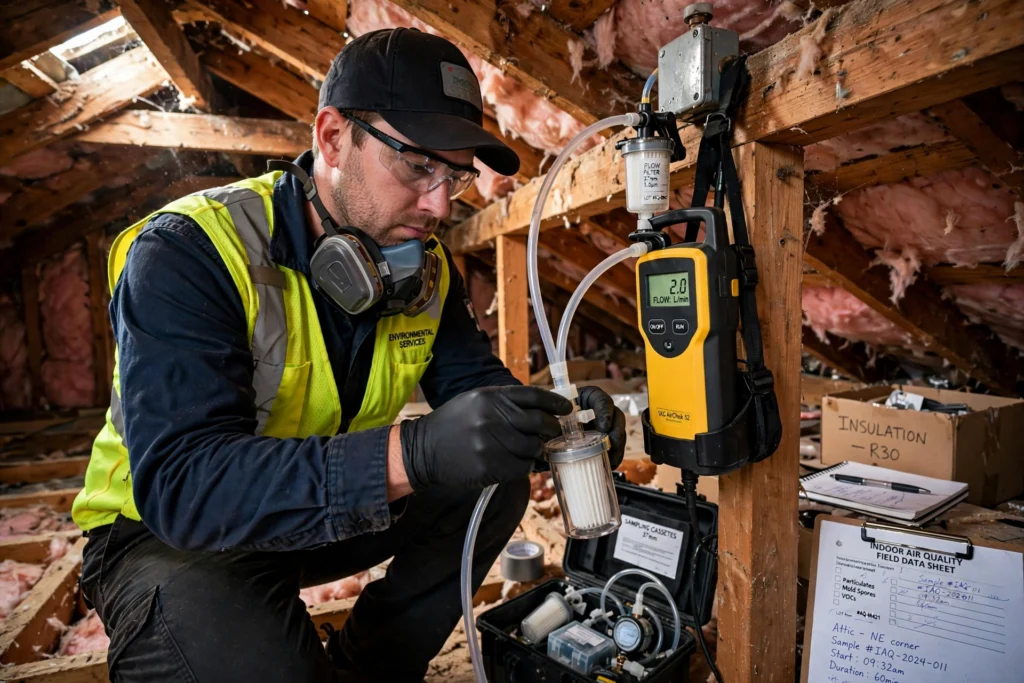
- Air sampling (spore trap): A pump draws air through a cassette for 5–10 minutes, capturing airborne spores on a sticky slide. A lab counts and identifies them. This tells you what’s floating in the air at that moment — useful as a snapshot, but spore counts fluctuate with humidity, HVAC activity, and even whether someone just walked through the attic.
- Surface sampling (tape lift or swab): A piece of clear tape pressed onto a stained surface, or a swab of the growth. The lab identifies the mold type. This confirms what is growing on a specific spot — helpful when you need to know if it’s a common allergenic species or something requiring extra precautions.
- Bulk sampling: A small piece of contaminated material (insulation, drywall) sent to the lab. More thorough than a tape lift, typically used when the extent of contamination inside a material matters.
- ERMI/HERTSMI (dust sampling): DNA-based analysis of settled dust, scoring 36 mold species. Primarily used in medical contexts — for example, when a physician wants to correlate a patient’s symptoms with their home environment. More expensive and slower than standard methods.
None of these tests locate the moisture source. That’s what a professional inspection does — moisture meters, thermal imaging, and tracing water intrusion paths. Testing and inspection answer different questions, and most situations need the inspection more than the lab work.
When Testing Is Worth It — and When It Isn’t
Testing is worth the money when:
- Real estate transactions: A buyer’s inspector flagged “possible microbial growth” and the seller disputes it. A lab result provides objective documentation that moves negotiations forward.
- Medical documentation: A household member has unexplained respiratory symptoms and their doctor wants environmental data. (Note: this isn’t medical advice — follow your physician’s guidance.)
- Post-remediation verification: After professional remediation, clearance testing confirms spore counts are back to normal background levels. This is standard practice for larger jobs.
- Landlord-tenant disputes: Objective lab data carries more weight than “it looks like mold” in a disagreement about responsibility.
- Insurance claims: Some adjusters want lab confirmation before approving a claim — check your policy requirements first.
Testing is usually a waste of money when:
- You can already see the mold. If there’s visible growth on the attic decking, you don’t need a lab to tell you it’s mold — you need someone to find the moisture source and remove it. The EPA’s guidance is clear: visible mold should be remediated regardless of species.
- There’s an obvious water problem. Active roof leak + staining = mold. Testing doesn’t change the action plan.
- Someone is trying to upsell you. Be cautious if a company insists on expensive testing before they’ll even look at the moisture problem. Inspection first, testing only if the situation warrants it.
What to Ask Before Paying for a Mold Test
- “What question will this test answer?” If the answer is vague, the test probably isn’t necessary. Every test should map to a specific decision.
- “Is the lab accredited?” Look for AIHA (American Industrial Hygiene Association) accreditation. A non-accredited lab’s results may not hold up in a dispute or insurance claim.
- “What’s the turnaround time?” Standard spore trap analysis takes 2–3 business days; rush service costs more. ERMI panels can take 1–2 weeks.
- “Will I get a written report I can share?” You want a lab report with species identification and spore counts — not just a verbal “yeah, there’s mold.”
- “Does this include finding the moisture source?” If not, you’ll still need an inspection separately. Budget for both.
Pasadena-Specific Testing Considerations
- Older housing stock: Pasadena’s pre-1978 homes often have multiple layers of roofing, old insulation, and decades of minor water events. Testing a single spot may not represent the full picture — multiple samples from different areas give more reliable results.
- Santa Ana wind-driven rain: Wind pushes rain under flashing and through vents in ways that don’t leave obvious interior stains. If you suspect wind-driven intrusion after a Santa Ana event, air sampling near the suspected entry point can confirm elevated spore levels even when visual signs are subtle.
- Post-remediation in hillside homes: Pasadena’s hillside areas (San Rafael, Linda Vista) have unique moisture patterns from groundwater and slope drainage. Post-remediation verification testing is especially worthwhile here to confirm the problem is truly resolved.
- Real estate market: In Pasadena’s competitive market, pre-listing testing can prevent closing-day surprises. A clean lab report is a stronger selling point than “we didn’t see anything.”
Attic Mold Testing FAQs
Q: How much does attic mold testing cost in Pasadena?
A: A basic air sample with lab analysis typically runs $300–$500 per sample; most situations need 2–3 samples (indoor, attic, outdoor control). Full ERMI panels run $400–$700. These are general ranges — see our 2026 Pasadena cost guide for remediation pricing.
Q: Can I use a home mold test kit from the store?
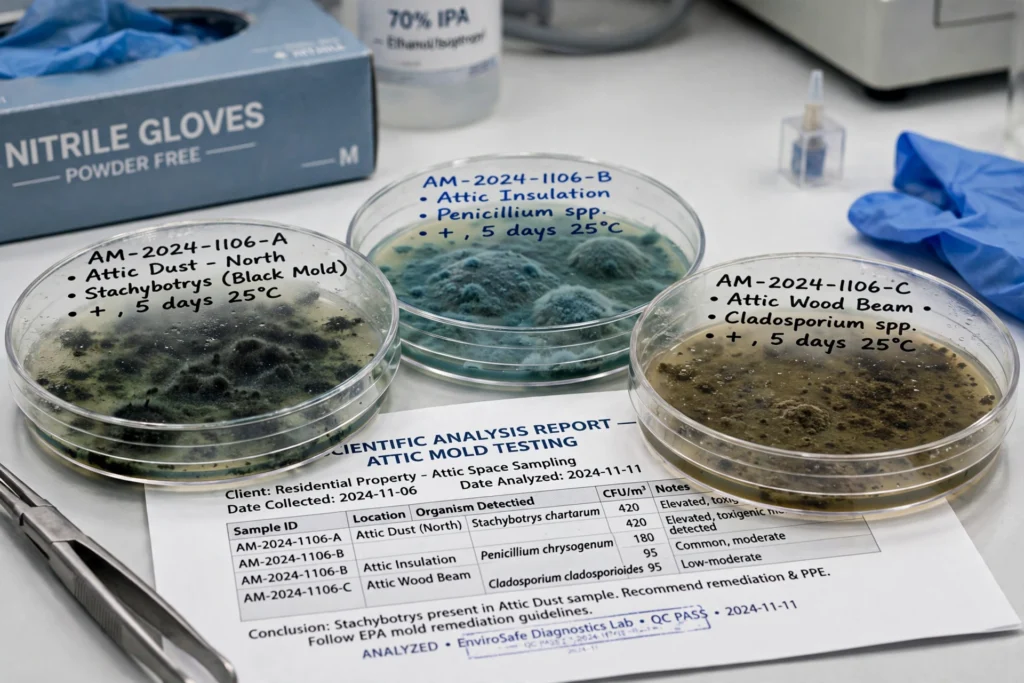
A: Those petri-dish kits grow something almost every time — mold spores are everywhere, including in clean homes. They don’t tell you if levels are abnormal, what the moisture source is, or whether remediation is needed. They’re not useless, but they’re not diagnostic either.
Q: Does California require mold testing before remediation?
A: No. California has no state mold licensing or mandatory pre-remediation testing requirement. Testing is a choice based on your situation — transaction, medical, legal, or personal peace of mind — not a legal obligation.
Q: What’s the difference between mold inspection and mold testing?
A: Inspection finds the problem (visual assessment, moisture readings, source identification). Testing identifies the specific mold types and quantities via lab analysis. Most situations need inspection; fewer need testing. A free inspection is the right starting point — call (877) 860-8345.
Q: How long do lab results take?
A: Standard turnaround is 2–3 business days for spore trap and surface samples. Rush service (24 hours) is available from most labs at a premium. ERMI/HERTSMI DNA panels take 1–2 weeks.
Not sure if you need testing? Start with a free inspection.
Call (877) 860-8345 for a free inspection.
We’ll tell you honestly whether testing makes sense for your situation — or whether an inspection alone answers your questions.