
Attic Mold Removal in Glendale, CA
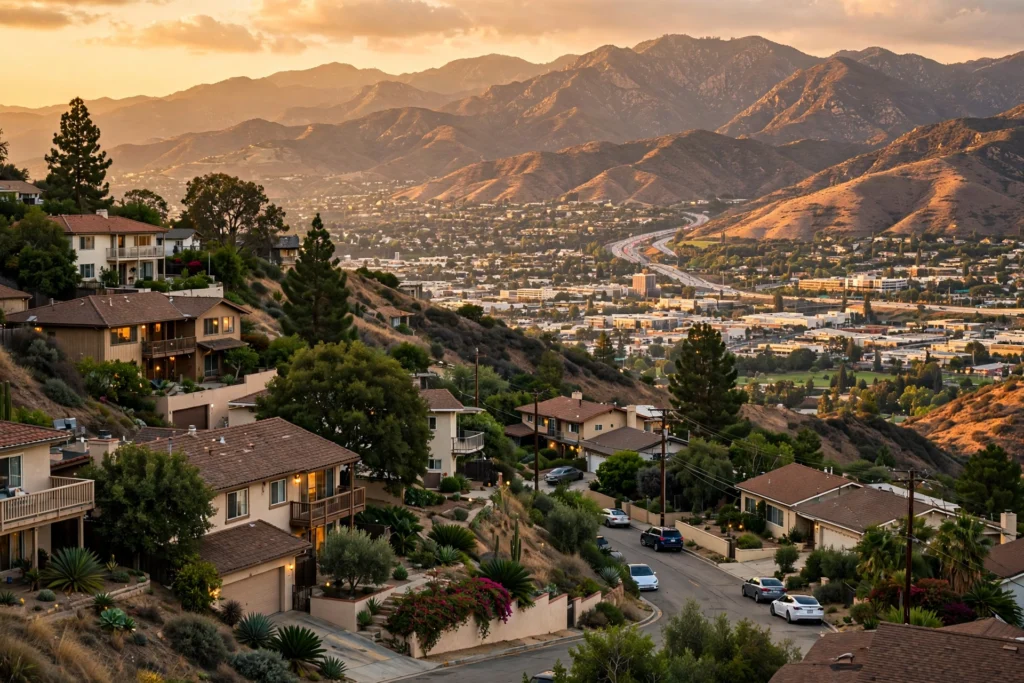
Glendale’s hillsides are beautiful real estate — and the reason so many of its attics stay damp. Between the Verdugo slopes, 1920s ventilation, and clay tile roofs past their underlayment’s lifespan, Glendale attics have their own mold story.
Call (877) 860-8345 — free inspection
Most Glendale homeowners call us about a leak — a stain on the ceiling, a roofer who lifted a tile and found something ugly underneath. But the attic is where Glendale’s mold problems quietly start, and they almost always trace back to the same handful of Glendale-specific factors: hillside geometry, aging tile underlayment, vintage ventilation, and canyon-funneled wind. Here’s the honest breakdown.
Why Glendale Homes Get Attic Mold
Direct answer: Glendale’s hillside neighborhoods (Adams Hill, Verdugo Woodlands, Chevy Chase Canyon, Glenoaks Canyon, San Rafael Hills) sit with one side of the house cut into the slope — the upslope rooms and attic sections stay cooler and damper than the downhill side, and hillside drainage failures push moisture into wall and foundation assemblies that eventually show up above. Add a 1920s–1940s housing stock with original ventilation (bath fans venting into attics, no ridge vents), Spanish clay tile roofs whose underlayment has been failing for a decade, and Santa Ana winds funneled through the canyons that lift those same tiles — and you have the recipe for Glendale attic mold.
The tile roof issue is the one that surprises people most. Clay tiles themselves are nearly immortal — they don’t rot, they don’t leak through the tile body. What fails is the felt or synthetic underlayment beneath the tiles, which after 25–40 years is often brittle, torn, or completely gone in sections. In Rossmoyne’s 1920s–30s Spanish Revivals, plenty of roofs still wear their original tiles over underlayment that was never meant to last this long. A tile that slips or cracks exposes that failed layer directly to rain, and the water runs down the slope into the attic decking. We’ve seen decks that looked fine from outside with rot spreading across a whole slope underneath.
Hillside geometry adds the second factor. In Adams Hill and Chevy Chase Canyon homes, the upslope half of the attic often has low clearance, poor air movement, and a north-facing exposure that never fully dries in winter. Condensation from temperature differentials across the slope — warm living space below, cold damp hillside against the foundation walls — feeds slow, persistent moisture in exactly the attic sections nobody checks. And when a Santa Ana funnels through a canyon, it doesn’t just threaten the downhill homes; lifted and displaced tiles on the exposed slopes are one of the most common post-wind findings across the Verdugo-facing neighborhoods.
The vintage housing stock ties it together. Glendale’s pre-war homes were built before bathroom exhaust code required through-roof venting, and in a huge number of them the fan still terminates inside the attic — pumping shower moisture into the rafters every single day. Add closed-off gable vents from old energy retrofits and attic insulation added without ventilation upgrades, and the whole assembly runs damp even when the roof itself is fine.
Signs Your Glendale Attic May Have Mold
You don’t need to climb up there yourself — but these are the things that tell us an inspection is warranted:
- A musty smell in the upstairs rooms or near the attic access, especially on the upslope (hillside) side of the house
- Dark staining on roof decking or rafters — visible with a flashlight through the attic hatch, often concentrated on one slope
- Slipped, cracked, or missing clay tiles after a wind event — every gap is a direct rain path past the tile to the underlayment
- Water stains on ceilings, particularly after Santa Ana season or winter storm sequences
- Bathroom exhaust fans that vent into the attic instead of through the roof — extremely common in Glendale’s pre-war homes, and a slow-motion moisture pump
- Hillside drainage problems — water pooling against the upslope foundation, damp retaining walls, or a sump/french drain system you know has failed
- Closed or painted-over gable vents from old remodels, plus attic insulation with no matching ventilation upgrade
One honest note: staining isn’t always mold, and mold isn’t always visible. That’s what the attic mold inspection is for — confirming what’s actually there before anyone talks about remediation.
What a Glendale Attic Mold Inspection Covers
Direct answer: a full walk of the attic (where accessible), moisture readings on decking and rafters, identification of the moisture source, and a written report with photos — free, whether or not you hire us for anything further.
In Glendale specifically, we pay extra attention to four things: the condition of tile underlayment on slopes with slipped or replaced tiles, ventilation adequacy in pre-war homes (bath fan terminations, gable-vent status), the low-clearance upslope attic sections in hillside homes where moisture hides, and any history of wind events or drainage work. The written report is yours to keep — shop it around, get a second quote, use it with your roofer. An inspection that pressures you into same-day remediation isn’t an inspection; it’s a sales call.
Attic Mold Removal Cost in Glendale
Direct answer: for a typical Glendale home in 2026, professional attic mold remediation runs $500 to $10,000+, with most residential jobs landing between $1,500 and $4,000 — the same ranges as Pasadena, since the housing stock and labor market are essentially the same.
- Spot treatment ($500 – $1,500): small, accessible area; no insulation replacement
- Moderate remediation ($1,500 – $4,000): multiple areas; containment; partial insulation removal
- Extensive remediation ($4,000 – $10,000+): widespread growth; full insulation replacement; ventilation corrections
Glendale-specific cost drivers: hillside attics with low upslope clearance are slower to work in (harder to move, longer containment setups); jobs where a failed tile underlayment is the moisture source cost more because the roof gets opened and re-underlaid in sections, not just the decking treated; and tile roofs generally add labor time over shingles. If a roofer needs to lift tiles to access the underlayment, expect the quote to reflect that — get the roofing scope in writing separately so the remediation number stays clean. Full breakdown of what drives the price: our 2026 Pasadena-area cost guide.
What Happens When You Call
Direct answer: the same two-step process we use everywhere in the service area — an attic mold inspection to confirm what’s actually there and what’s causing it, followed by remediation and removal if active growth is confirmed.
We don’t quote remediation sight unseen over the phone — every job in Glendale starts with an in-person look at the attic, not a guess. If the inspection finds nothing active, we’ll tell you that too. We’d rather earn a customer for life than sell a job that isn’t needed.
Keeping Mold Out of Your Glendale Attic
After remediation — or if your inspection comes back clean and you want to keep it that way:
- Have tile underlayment inspected at every roof check. Lifting a few tiles to eyeball the felt underneath is cheap; discovering it failed five years ago is not. If your tile roof is 25+ years old and nobody has checked the underlayment, that’s overdue.
- Vent bath fans through the roof, not into the attic. The highest-ROI fix in Glendale’s pre-war homes.
- After every canyon wind event — check for slipped or cracked tiles before the next rain, not next year. Glendale’s canyons funnel Santa Anas hard.
- Keep hillside drainage working. Clean french drains, keep water moving away from the upslope foundation, and don’t let a clogged yard drain push water against the house.
- Don’t seal vents during insulation upgrades. Adding insulation without ventilation is how 1920s attics become damp boxes — if a contractor suggests closing off gable vents, get a second opinion.
More on this: attic mold prevention for Pasadena-area homes.
Glendale Attic Mold FAQs
Q: Do you actually serve Glendale, or is this just a landing page?
A: We serve Glendale directly — it’s minutes from Pasadena and part of our regular service area, not a lead-gen redirect to someone else. Same inspection, same written report, same crew standards as Pasadena.
Q: Do clay tile roofs cause attic mold?
A: Not the tiles — the underlayment beneath them. Clay tiles outlast everything, but the felt or synthetic layer under a 25–40-year-old tile roof is often brittle or failed, and any slipped or cracked tile gives rain a direct path to it. If your Glendale tile roof has never had its underlayment checked, that’s the first thing we’d look at.
Q: My home is on a hillside — does that change the inspection?
A: It changes where we look hardest. The upslope side of a hillside attic — low clearance, cool, often north-facing — is where moisture lingers and where we take extra readings. It also means we check whether hillside drainage is feeding the problem, since an attic fix won’t hold if water keeps pushing in from the slope.
Q: How much does an inspection cost?
A: Our inspection is free, full stop — whether or not you hire us for remediation. If you want a standalone paid inspection purely for documentation (e.g., a transaction file), that’s typically $250–$500 in this market.
Q: How much will remediation cost for my Glendale home?
A: Most residential jobs land between $1,500 and $4,000; the honest answer for your specific attic comes from the free inspection, not a webpage. See the cost section above or the full 2026 cost guide for what drives the number up or down.
Q: How fast can someone come out to Glendale?
A: Scheduling depends on current volume, but most Glendale inspections are booked within the same week — call (877) 860-8345 for the next available slot.
Q: There’s no mold license in California — so how do I know the work is legitimate?
A: Correct — California has no state mold license, so anyone can print “certified” on a business card. Judge by the process instead: a real inspection with moisture readings and photos, an itemized written scope, containment and negative air during the work, and the moisture source fixed — not just fogged. If a quote is one line with no breakdown, get a second one.
See all the areas we serve or read the full attic mold removal guide. Questions first? Contact us.
Pasadena Attic Care — free inspection, honest scope, no scare tactics.
📞 Call (877) 860-8345
Hours: Mo,Tu,We,Th,Fr,Sa,Su 09:00-17:00
Serving Glendale, Pasadena & the San Gabriel Valley | (877) 860-8345