
Attic Mold Prevention in Pasadena, CA
Direct answer: Preventing attic mold in Pasadena comes down to controlling moisture — proper ventilation, sealed air leaks, and keeping humidity below 60%. Most Pasadena attic mold starts from bathroom fans venting into the attic, roof leaks, or poor airflow. Fix these three things and you prevent the vast majority of attic mold problems.
Pasadena’s climate creates a perfect storm for attic mold. Warm Santa Ana winds, marine layer moisture from the coast, and older homes with outdated ventilation — it’s no surprise attic mold is one of the most common issues in Pasadena homes. The good news? Attic mold is almost entirely preventable with the right steps.
Call (877) 860-8345 for a free attic inspection if you suspect moisture problems.
Why Pasadena Attics Are Prone to Mold
Pasadena homes face unique mold risks:
- Older housing stock: Many Pasadena homes (especially in Bungalow Heaven, Madison Heights, and Oak Knoll) were built before modern ventilation standards. Original attic vents are often undersized or blocked.
- Marine layer moisture: Overnight and morning humidity from the coast seeps into poorly sealed attics, especially May through August.
- Santa Ana winds: Hot, dry winds drive dust and debris into attic vents, clogging them over time.
- Bathroom fans venting into attics: This is the #1 cause found during inspections. Many older Pasadena homes have bath fans that blow moist air directly into the attic instead of outside.
7 Proven Ways to Prevent Attic Mold
1. Vent Bathroom Fans to the Outside (Not the Attic!)
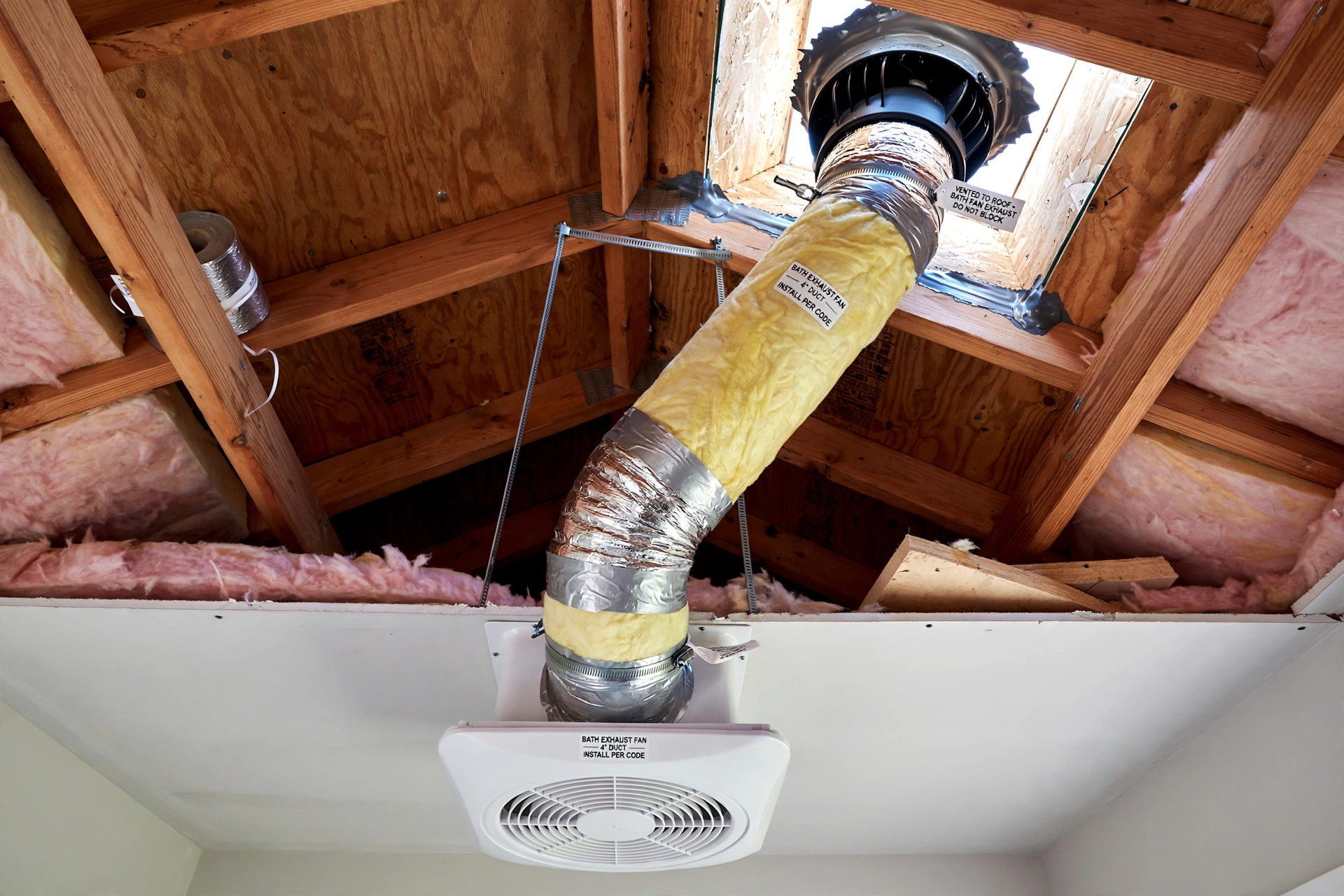
This single fix prevents more attic mold than anything else. Every shower sends gallons of moisture into the air. If your bath fan vents into the attic, all that moisture condenses on cold roof sheathing — creating ideal mold conditions.
What to do: Check where your bathroom exhaust ducts go. They should run through the roof or a gable wall to the outside. If they end in the attic, have them properly routed outside.
2. Ensure Proper Attic Ventilation
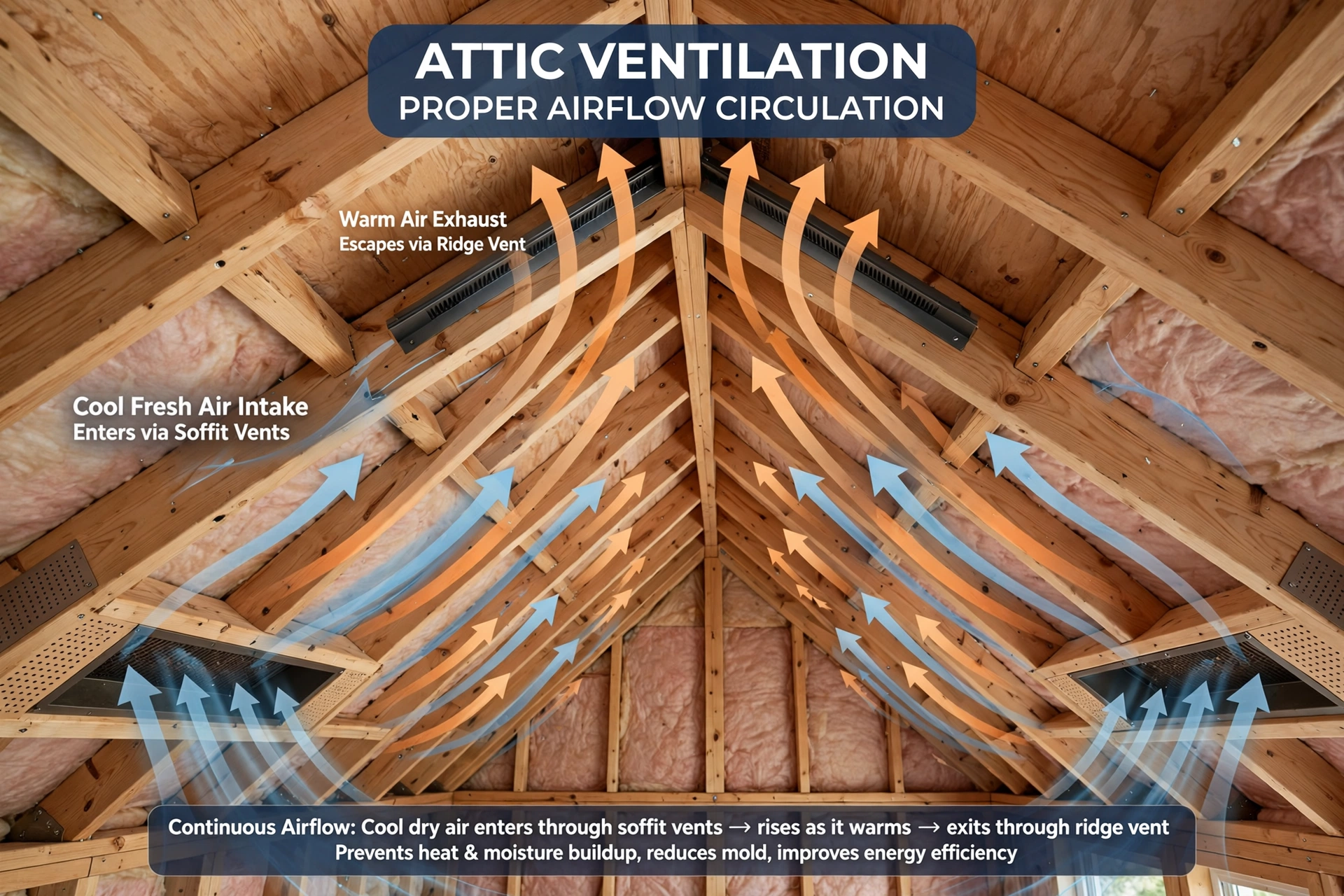
Your attic needs balanced airflow — intake vents (soffit) and exhaust vents (ridge or gable). Without it, heat and moisture get trapped.
What to do: Make sure soffit vents aren’t blocked by insulation. A good rule of thumb is 1 square foot of ventilation per 150 square feet of attic floor space.
3. Seal Air Leaks from Living Spaces
Warm, moist air from your home rises into the attic through gaps around recessed lights, plumbing pipes, chimneys, and attic hatches. In winter, this moisture condenses on cold surfaces.
What to do: Seal gaps with caulk or expanding foam. Cover recessed lights with insulation-rated covers. Weatherstrip the attic hatch.
4. Fix Roof Leaks Immediately
Even a small roof leak can saturate insulation and wood, creating mold within 48-72 hours. Pasadena’s winter rains are the biggest culprit.
What to do: Inspect your roof annually (especially after storms). Look for missing shingles, cracked flashing, and water stains on attic wood.
5. Keep Humidity Below 60%
Mold thrives above 60% relative humidity. Pasadena’s marine layer can push attic humidity dangerously high.
What to do: Consider a humidity monitor in your attic ($15-30). If readings consistently exceed 60%, improve ventilation or add a dehumidifier.
6. Insulate Properly (But Don’t Block Vents)
Good insulation keeps attic temperatures stable, reducing condensation. But insulation shoved against soffit vents blocks the very airflow you need.
What to do: Install baffles (rafter vents) to keep insulation away from soffit vents while maintaining airflow channels.
7. Schedule Annual Attic Inspections
Most attic mold goes unnoticed for months or years because homeowners rarely go up there. An annual inspection catches moisture problems before they become mold problems.
Call (877) 860-8345 for a free attic inspection in Pasadena.
Pasadena-Specific Prevention Tips
Hillside homes (San Rafael Hills, Linda Vista): These areas get more wind-driven rain. Check flashing and roof penetrations extra carefully.
Historic homes (Bungalow Heaven, Pasadena Highlands): Original 1920s ventilation is almost certainly inadequate by modern standards. Upgrading to ridge + soffit ventilation makes a dramatic difference.
Near the Arroyo Seco: Higher ambient moisture means your attic needs better-than-average ventilation to stay dry.
What NOT to Do
- Don’t just spray bleach on mold — it doesn’t kill mold roots in porous wood and the moisture makes things worse.
- Don’t install a powered attic fan without sealing air leaks first — it can pull conditioned air (and moisture) from your home into the attic.
- Don’t ignore a musty smell — if your upstairs smells musty, there’s likely a moisture problem developing.
Frequently Asked Questions
How often should I inspect my Pasadena attic for mold?
At least once a year, ideally before winter rains (October-November). Also check after any major storm or if you notice musty odors upstairs.
Can I prevent attic mold myself, or do I need a professional?
Basic steps like checking bath fan routing, keeping vents clear, and monitoring humidity are DIY-friendly. For ventilation upgrades, air sealing, or existing mold, professional help ensures it’s done right.
Does attic mold affect my health?
Attic mold can affect indoor air quality as air circulates between the attic and living spaces. People with allergies, asthma, or respiratory conditions are most sensitive. The CDC recommends addressing mold promptly.
How much does attic mold prevention cost in Pasadena?
Basic DIY prevention (sealing gaps, clearing vents) costs under $100 in materials. Professional ventilation upgrades typically range from $500-2,000 depending on attic size. A free inspection can identify exactly what your attic needs — call (877) 860-8345.
Will my homeowner’s insurance cover mold prevention?
Insurance typically covers mold remediation from sudden events (like a burst pipe) but not prevention or long-term maintenance issues. Check your policy for specifics — this isn’t legal advice.
Note: This page provides general educational information about attic mold prevention. Every home is different — a professional inspection can identify your specific risks.
Concerned about moisture in your attic? Call (877) 860-8345 for a free inspection. We’ll check your ventilation, look for moisture problems, and tell you honestly what your attic needs.