
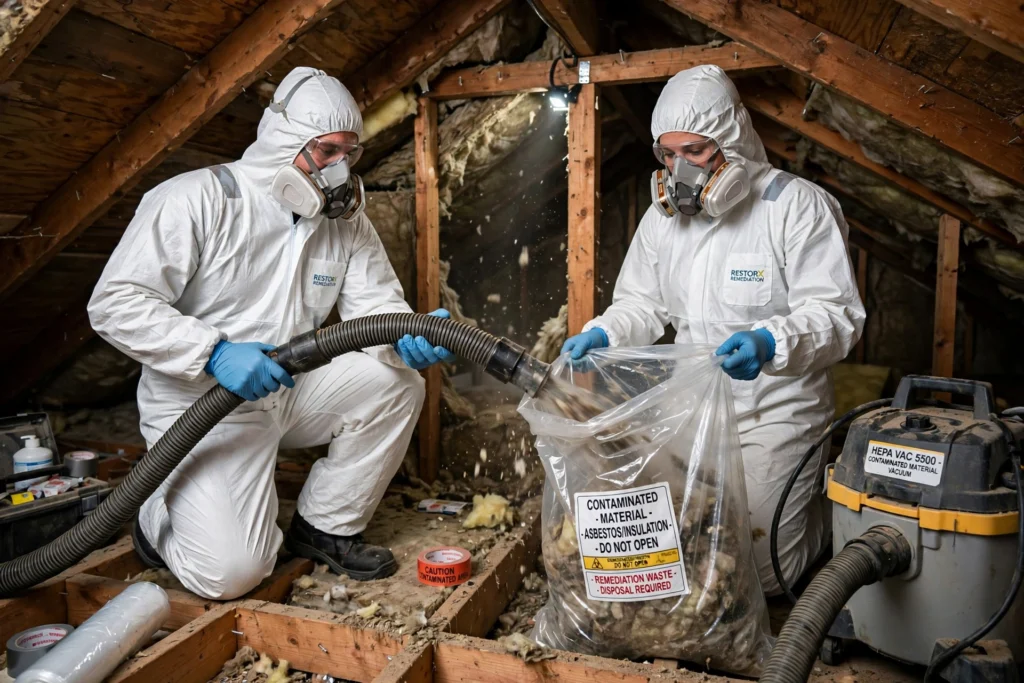
Attic Insulation Removal & Replacement in Pasadena, CA
Direct answer: Attic insulation removal is necessary when insulation is contaminated by mold, soaked from roof leaks, or damaged by pests. Insulation is porous — once mold grows into it or it stays damp, cleaning doesn’t work. It has to come out and be replaced. In Pasadena’s older homes, we commonly find original insulation that’s compressed, moldy, or full of rodent debris.
Insulation is porous. Once it has sat under an active leak or in a chronically damp attic, it usually can’t be cleaned — it has to come out.
Call (877) 860-8345 for a free attic inspection.
When Does Attic Insulation Need to Be Removed?
Not all old insulation needs removal. Here’s when it does:
- Mold contamination: If mold has grown into the insulation (not just on the surface), the insulation itself is compromised. Surface cleaning won’t reach mold roots embedded in fiberglass or cellulose fibers.
- Water damage: Insulation that has been soaked from a roof leak loses its R-value permanently. Wet insulation also becomes a mold breeding ground within 48-72 hours.
- Pest contamination: Rodent droppings, nesting materials, and urine in insulation create health hazards that can’t be cleaned out. This is extremely common in Pasadena’s older neighborhoods.
- Compressed or settled insulation: Old insulation that has compressed to half its original thickness no longer insulates effectively. If it’s also dirty or damp, replacement makes more sense than adding new material on top.
- Fire or smoke damage: Insulation absorbs smoke odors permanently and must be removed after any attic fire event.
When Can Insulation Stay?
If your insulation is dry, clean, and simply old — it may not need full removal. In some cases, new insulation can be added on top (called “topping off”) to restore R-value. A professional inspection determines which approach makes sense for your attic.
Our Insulation Removal Process
1. Containment
Before any removal begins, the work area is sealed off from living spaces. This prevents contaminated particles from spreading through your home during removal.
2. Powerful Vacuum Extraction
Commercial-grade vacuum systems with HEPA filtration extract old insulation through large hoses run from the attic to a truck-mounted collection unit outside. This keeps dust and debris contained.
3. Surface Cleaning
Once insulation is out, the exposed attic floor, joists, and rafters are visible for the first time in years. Any mold on wood surfaces is addressed at this stage, before new insulation goes in.
4. Air Sealing (Recommended)
With insulation removed, it’s the perfect time to seal air leaks — gaps around pipes, wiring, recessed lights, and the attic hatch. This step dramatically improves energy efficiency and prevents future moisture problems.
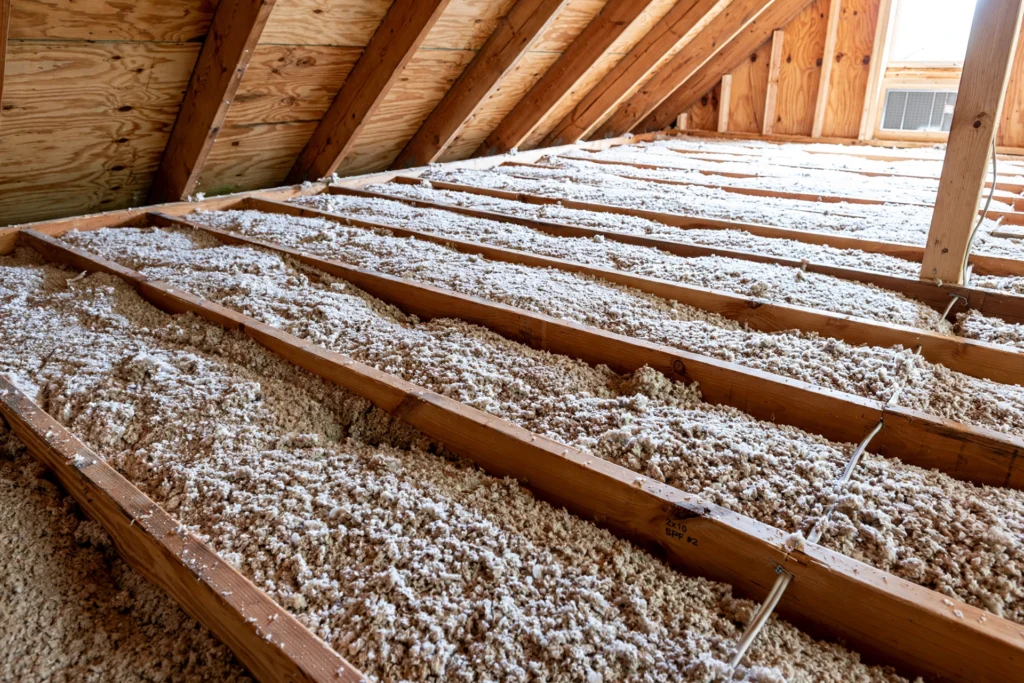
5. Fresh Insulation Installation
New insulation is blown in to the proper depth for Pasadena’s climate zone. Most Pasadena homes benefit from R-38 (about 12-14 inches of blown cellulose or fiberglass).
Why Pasadena Homes Often Need This
Pre-1980s insulation: Many Pasadena homes still have their original insulation — thin, compressed batts from the 1960s-70s that were never designed for modern energy standards.
Rodent activity: Pasadena’s mature tree canopy means roof rats are common. Their droppings and nesting in insulation are a primary reason for removal in neighborhoods like Bungalow Heaven and Madison Heights.
Undetected roof leaks: Small leaks that went unnoticed for months saturate insulation silently. By the time stains appear on ceilings, the insulation above is often already ruined.
What Does It Cost in Pasadena?
Insulation removal and replacement typically ranges from $1.50 to $3.50 per square foot in the Pasadena area, depending on attic size, contamination level, and insulation type. A 1,000 sq ft attic generally falls between $1,500 and $3,500 for full removal and replacement.
Call (877) 860-8345 for a free inspection and honest assessment of what your attic needs.
Frequently Asked Questions
Can I remove attic insulation myself?
DIY removal is possible but not recommended when mold or pest contamination is present. Without proper containment and HEPA filtration, you risk spreading contaminants through your home. Professional removal also ensures the attic is properly prepped for new insulation.
How long does insulation removal take?
Most residential attics (1,000-1,500 sq ft) take one day for removal and another day for new insulation installation. Larger or heavily contaminated attics may take longer.
Will my energy bills go down with new insulation?
Properly installed new insulation (R-38) can reduce heating and cooling costs significantly compared to old, compressed insulation. The air sealing done during the process adds further savings.
Do I need to leave my home during removal?
In most cases, no. The work area is contained, and the vacuum system vents outside. However, household members with severe respiratory conditions may prefer to be elsewhere during the work.
What type of insulation is best for Pasadena?
Blown-in cellulose and blown-in fiberglass are both excellent for Pasadena’s climate. Cellulose has slightly better air-sealing properties; fiberglass resists moisture better. Your specific attic conditions determine the best choice.
Note: This page provides general educational information. Every attic is different — a professional inspection identifies your specific needs.
Wondering if your insulation needs to go? Call (877) 860-8345 for a free attic inspection. The free inspection gives you an honest answer on whether removal is needed or your insulation can stay.