
Attic Mold Inspection in Pasadena, CA
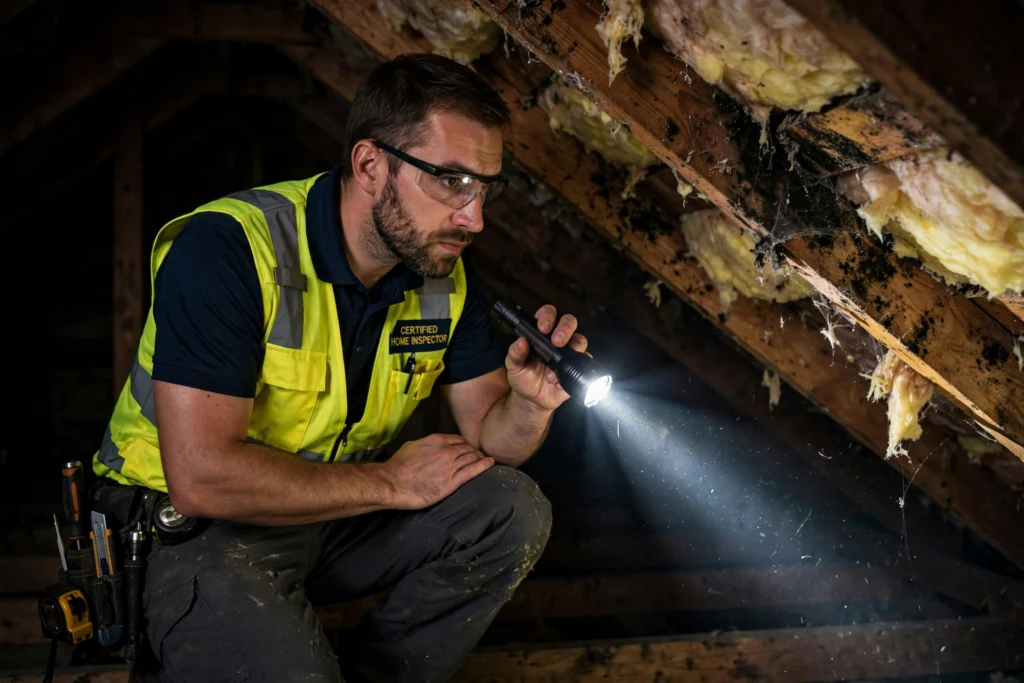
If you’re searching for an attic mold inspection in Pasadena, you probably already have a reason — a musty smell upstairs, dark staining a home inspector flagged, or a roof that’s seen too many winters. Here’s the straight answer: a proper inspection isn’t someone poking their head through the attic hatch with a flashlight. It’s a full physical walkthrough of the attic — roof deck, rafters, insulation, ventilation, ductwork — plus detective work on where the moisture is coming from, ending in a written report you can actually use.
That’s what this page covers: what a real inspection involves, what it should cost in Pasadena, when you genuinely need one, and how to tell a thorough inspector from a guy with a flashlight.
What Does an Attic Mold Inspection Actually Involve?
Direct answer: An inspector physically enters the attic and examines the roof deck, rafters, insulation, ventilation pathways, and any ductwork or vents for staining, moisture, or active growth. Then they trace the moisture source — because mold without a moisture source is a symptom, not the problem. You should receive a written report with findings, likely causes, and a clear scope of what remediation would involve.
Here’s how a thorough inspection actually unfolds:
The physical walkthrough
The inspector should be in the attic, walking it on the joists or decking — not leaning through the hatch. They’re looking at the underside of the roof deck for dark staining or fuzzy growth, checking rafters and ridge beams, lifting insulation in a few spots to see what’s underneath, and examining anywhere ducts, vents, or plumbing stacks penetrate the attic. Bath fans are a classic culprit in Pasadena homes — more on that below.
Moisture source detective work
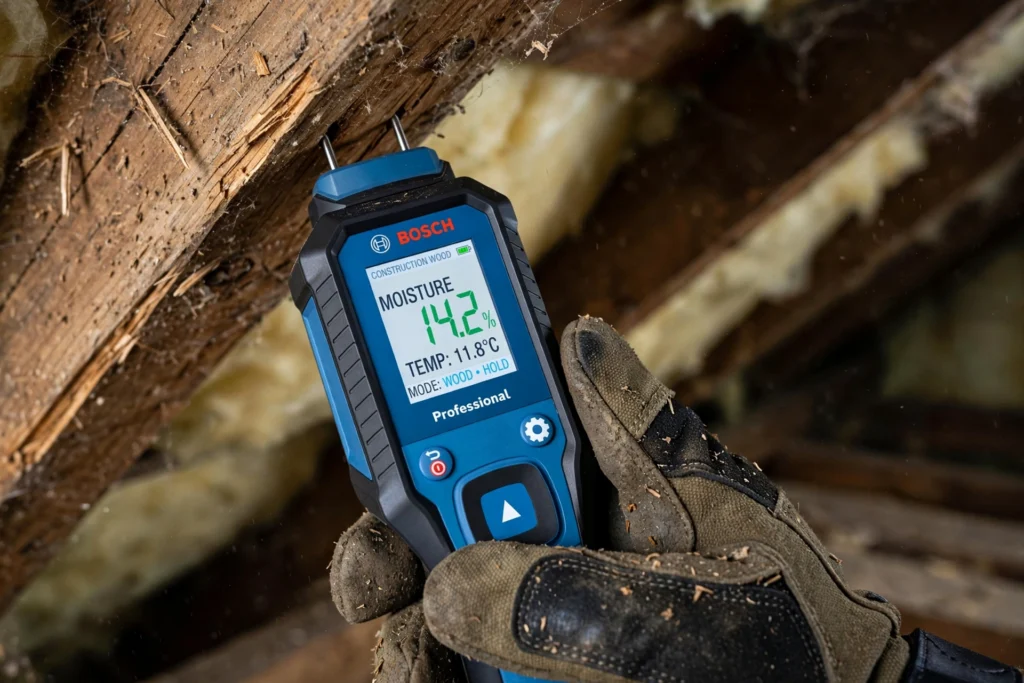
This is the part that separates a real inspection from a glance. Mold needs moisture, and the moisture has a source: a slow roof leak, condensation from poor ventilation, a bath fan dumping humid air into the attic, or sometimes plumbing. A good inspector carries a moisture meter and checks suspect areas, notes ventilation balance (are the soffit vents even open?), and tells you which source is feeding the problem. If someone offers to clean mold without identifying the moisture source, that’s a red flag — it’ll just come back.
The written report
You should walk away with documentation: what was found, where, what likely caused it, and an itemized scope for remediation — not a vague number quoted over the phone. This report matters beyond the cleanup itself. If you’re buying or selling, it goes into the escrow file. If you’re filing an insurance claim, it’s your evidence. Get it in writing, always.
Hatch-Only Glance vs. Full Walkthrough — Why It Matters
Direct answer: A hatch-only inspection — someone shining a light from the attic opening — misses most problems. Mold hides behind insulation, in far corners, and along the eaves where you can’t see from the hatch. A full walkthrough takes longer but it’s the only way to know the true extent.
We’ve been called into Pasadena homes where a previous “inspection” from the hatch found “a small spot,” and the full walkthrough revealed staining across half the roof deck. The difference matters because scope determines price — and nobody wants a mid-job surprise where the quote doubles because the real extent wasn’t mapped.
When you’re comparing inspectors, ask one question: “Will you physically walk the attic?” If the answer is hedged, keep looking.
7 Things Every Pasadena Attic Inspection Must Check
Pasadena attics have their own personality. A generic checklist from a national franchise misses the local patterns we see over and over:
- Sealed soffit vents from past re-roofing. This is probably the single most common issue in Pasadena’s older housing stock. During a re-roof, painters or roofers seal over the soffit vents — sometimes with paint, sometimes with new fascia boards. The attic loses its intake airflow, moisture gets trapped, and mold follows. We check every soffit vent, not just a sample.
- Bath fans venting into the attic. In Craftsman bungalows across Bungalow Heaven and Garfield Heights, original construction often vented bath fans straight into the attic space — or a remodel “improved” things by disconnecting a proper roof vent. Every shower pumps warm, wet air directly onto cold roof decking. We trace every bath fan to its termination point.
- Low-slope sections on older roofs. Many pre-1940s Pasadena homes have lower-pitch sections where water lingers longer after rain. These are the first places staining shows up.
- Insulation condition and depth. Matted, discolored, or compressed insulation tells a story — sometimes it’s just age, sometimes it’s been wet repeatedly. We lift and look underneath in multiple spots.
- Ridge and gable vent balance. An attic needs intake and exhaust. Plenty of Pasadena attics have a ridge vent but blocked soffits — all exhaust, no intake. That’s a system that can’t breathe.
- Previous repair attempts. Bleach stains, painted-over decking, new insulation laid over old problems — we see cover-ups regularly, usually from a flip or a quick pre-sale cleanup. Paint over mold doesn’t fix mold.
- Hillside and canyon-adjacent moisture. Homes near the Arroyo Seco or in the San Rafael Hills can get moisture intrusion that has nothing to do with the roof — subsurface water pressure, grading issues. An attic inspector who only looks at the roof misses this entirely.
How Long Does an Attic Mold Inspection Take?
Direct answer: A thorough residential attic inspection in Pasadena typically takes 45 to 90 minutes on-site, depending on attic size, accessibility, and how much there is to document. If someone’s in and out in 15 minutes, they didn’t inspect — they glanced.
The written report usually follows within 24 to 48 hours. It should include photos of findings, moisture readings where relevant, the likely moisture source, and an itemized remediation scope with pricing.
How Much Does an Attic Mold Inspection Cost in Pasadena?
Direct answer: In the Pasadena area, a standalone professional attic mold inspection typically runs $250 to $500. Many companies — including us — offer the inspection free when you proceed with remediation, or as a free initial assessment.
Here’s our honest take on pricing: be wary of anyone charging $800+ for a “mold inspection” that’s really a sales call for a $15,000 remediation package, and equally wary of the “free inspection” that lasts ten minutes and ends with scare tactics. A legitimate inspection — paid or free — should still include the full walkthrough and a written report. The price tag matters less than the thoroughness.
Pasadena Attic Care offers a free attic inspection for Pasadena homeowners — full walkthrough, moisture checks, written findings. If there’s no mold, we’ll tell you that too. Call (877) 860-8345.
5 Situations When You Should Get an Attic Inspection
- You’re buying a home — especially a pre-1960s Pasadena property. General home inspectors flag “possible microbial growth” and move on; you need a specialist to define the scope before you close.
- You’re selling — a pre-listing inspection lets you address issues on your timeline instead of under escrow pressure (and California disclosure law requires you to disclose known mold anyway).
- You smell something musty upstairs — musty odor with no visible source is the classic early warning.
- After roofing work — re-roofs are when soffit vents get sealed and new problems start. A post-job inspection is cheap insurance.
- Dark staining spotted — from the hatch, on a ceiling, or by a handyman. Don’t guess; get it identified.
Do You Need Mold Testing Too, or Is an Inspection Enough?
Direct answer: For most Pasadena homeowners, a thorough visual inspection plus moisture investigation is enough to define the problem and the fix. Testing (air or surface sampling) is worth it in specific situations: medical necessity, landlord-tenant disputes, post-remediation clearance verification, or when you’re buying and want independent documentation.
Testing answers what species and how much is airborne. Inspection answers where it is, why it’s there, and what to do about it. Most remediation decisions need the second, not the first. We’ve written a full honest guide on this: Attic Mold Testing in Pasadena — Do You Actually Need It?
What Happens After the Inspection?
You get the written report. Then one of three things:
- No mold found — you get peace of mind and, if we spotted ventilation issues, recommendations to prevent future problems.
- Minor mold — localized treatment, usually a straightforward scope with clear pricing.
- Extensive mold — full remediation scope: containment, removal or treatment, insulation replacement if needed, and fixing the moisture source. See our 2026 Pasadena cost guide for what that typically runs.
Either way, you decide with full information. No pressure, no scare tactics — that’s not how we work.
Attic Mold Inspection FAQs
Can I just look in the attic myself instead of hiring an inspector?
You can do a preliminary check — look for dark staining on the roof deck, sniff for mustiness, check if bath fans vent outside. But most homeowners can’t safely walk an attic (stepping between joists risks going through the ceiling), can’t assess ventilation balance, and can’t identify moisture sources with a meter. A DIY look is a good first step; it’s not a substitute for a professional inspection when something’s actually wrong.
Will the inspector have to cut into my walls or ceilings?
No. An attic mold inspection is non-invasive — visual examination, moisture meter readings, and documentation. No demolition. If remediation is later needed, that’s a separate conversation with its own scope.
How do I know the inspector isn’t just trying to sell me remediation?
Fair question in this industry. Signs of an honest inspector: they give you a written report you can take to any contractor, they tell you when there’s no problem, they identify the moisture source (not just the mold), and they don’t pressure you to decide on the spot. Get the report, then get a second quote if the scope is large. We encourage it.
Does attic mold affect my home’s value?
Unaddressed mold discovered during a buyer’s inspection can delay or kill a sale — and California law requires sellers to disclose known mold. Addressed professionally with documentation, it’s a resolved maintenance item, not a value killer. The documentation is the key part.
My attic was “treated” before but the smell came back. Can an inspection tell me why?
Usually, yes — and the answer is almost always that the moisture source was never fixed. Previous treatment without ventilation repair or leak correction is the most common story we hear. An inspection focused on moisture sources will find what the treatment missed.
Do you inspect attics in Altadena, South Pasadena, and San Marino too?
Yes — we serve Pasadena and the surrounding San Gabriel Valley including Altadena, South Pasadena, San Marino, Sierra Madre, Arcadia, and San Gabriel.
Not sure what’s growing up there? Let’s find out.
Free attic inspection for Pasadena homeowners — full walkthrough, moisture checks, and a written report. If there’s nothing wrong, we’ll tell you that.
📞 Call (877) 860-8345 — or request a callback and we’ll reach out today.